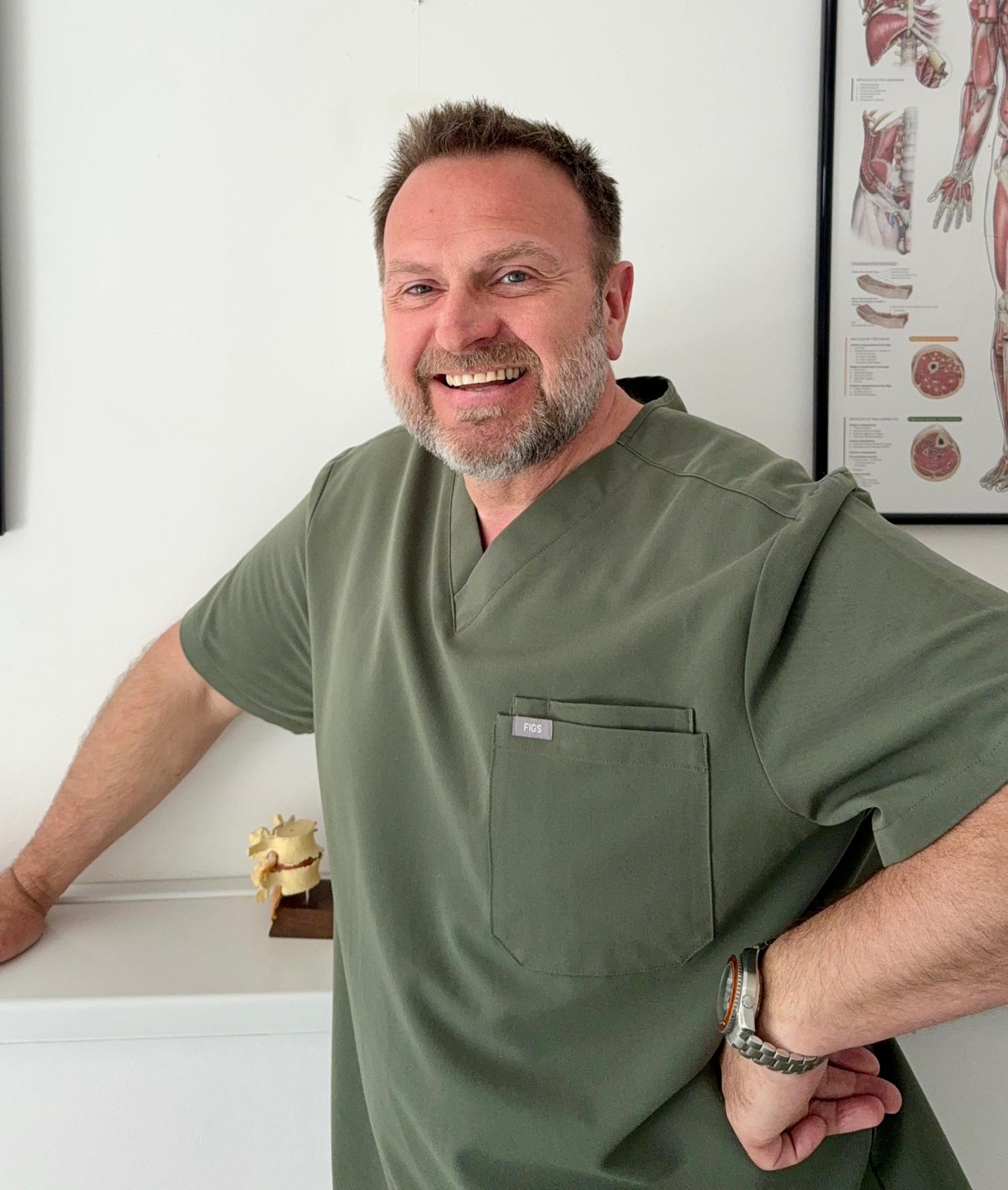
Most people who book their first osteopathy appointment have no real idea what to expect. Some are nervous. Some have been told vague things by friends. Some have googled it and come away more confused than when they started.
So here is exactly what happens at your first appointment with us, step by step, with no vagueness. Because understanding what is coming makes everything easier, and because we think you deserve to know what you are walking into.
Before you arrive — your intake form
Before your appointment you will receive a short intake form. This covers your main complaint, relevant medical history, medications, and contact details. It takes about five minutes and it means we can spend your appointment time on you rather than on admin.
We also use AI-assisted note-taking during consultations — specifically Heidi and Plaude. These systems record the conversation to generate written clinical notes, which are then stored securely in our practice management system. The audio is deleted once the notes have been verified. This means your osteopath can focus entirely on you rather than writing notes during your appointment.
You will be asked to confirm your consent for this and for examination and treatment before we begin.
Arriving at the clinic
We are at 276 Whitegate Drive, Blackpool, FY3 9JW, within the chiropodist practice. If you are not sure where to go when you arrive, call us on 07946 356 373 and we will come and meet you. There is parking available nearby.
You will be greeted and shown in. The clinic is calm, professional, and not intimidating. If you need to bring someone with you, that is absolutely fine.
The consultation — listening first
The first part of your appointment is a conversation. We want to hear about your pain or problem in your own words. When did it start? What makes it better or worse? What have you tried already? Has anything like this happened before?
We are not just listening for clinical information — though we are doing that too. We are trying to understand your situation as a whole. Your work, your activity levels, your sleep, your stress. Because these things are not separate from your pain. They are part of it.
This takes time and we do not rush it. A new patient appointment is long enough for this conversation to happen properly.
The assessment — reading the body
After the consultation we move into the physical assessment. We will ask you to move in various ways, and we will use our hands to assess how your body is moving and where it is not.
We will ask you to undress to a degree that allows us to see and feel the area of concern. We like to be able to see skin where possible as it gives us valuable clinical information. If you would prefer not to undress, wearing loose-fitting clothing that can be moved or rolled up is a practical alternative. Either way, your comfort comes first. You are in control at every point and can refuse any part of the examination without it affecting your care.
We are not just looking at the area that hurts. Osteopathy is a whole-body discipline. The source of pain is often somewhere different to where the pain is felt, and we are assessing the full picture.
We are not just looking at where it hurts. The source of pain is often somewhere different to where the pain is felt.
The diagnosis and treatment plan — honesty before hands-on work
Before any treatment begins, we will explain what we have found, what we think is driving your symptoms, and what we propose to do about it. We will tell you how many sessions we think are warranted and why.
We do not sign you up to treatment blocks. You book one appointment at a time. If after your first session we think you need more appointments, we will say so clearly and explain the reasoning. If we think one or two sessions will be enough, we will say that too. There is no commercial incentive to overstate what is needed.
Hands-on treatment
Treatment varies depending on what the assessment shows and how your body responds. Techniques include soft tissue work, joint mobilisation, manipulation, muscle energy technique, and, where appropriate, craniosacral therapy, acupuncture, or dry needling.
Some techniques are gentle and barely feel like anything is happening. Others are more direct. We will always explain what we are about to do before we do it, and adapt based on your feedback throughout.
Most people feel something shift during the first session. Some feel improvement immediately. Others feel a little sore for a day or two as the body adjusts, before things settle and improve. Both are normal. We will tell you what to expect from your specific treatment before you leave.
After your appointment
Before you go, we will give you specific advice for the next 24 to 48 hours. Drink plenty of water. Keep moving gently. Avoid strenuous exercise on the day if you have had significant hands-on work. Give your body time to respond.
We will also give you any home exercises or postural advice that is relevant to your case. And if you have any questions after you leave, you can always call or message us.
The one thing most people say afterwards
The most common thing people say after their first appointment is some version of: "I wish I had come sooner." Not because we are particularly brilliant, but because the reality of osteopathy is so much more straightforward and less intimidating than people imagined it would be.
If you have been putting off booking because you are not sure what to expect, now you know. It is a conversation, an assessment, an honest explanation, and hands-on treatment. In that order. Nothing to worry about.